
8 May 2026 | Virtual Event
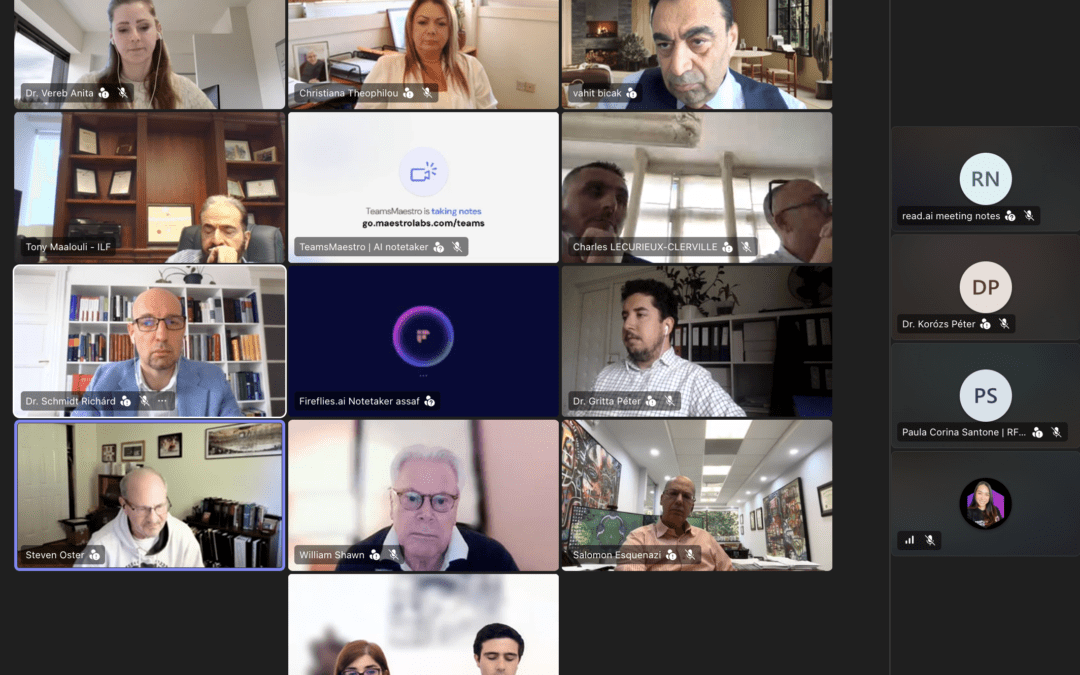
The International Law Firms (ILF) network successfully held its Virtual Conference 2026 on 8 May, bringing together legal experts from multiple jurisdictions to discuss the rapidly evolving challenges of cross‑border employment in the digital era.
The conference focused on how digitalization, remote work, and artificial intelligence are reshaping employment relationships, while legal, tax, and immigration frameworks remain largely territorial.
Opening Remarks
The conference was opened by ILF Chairman Tony Maalouli, who welcomed participants and emphasized the growing disconnect between borderless work arrangements and jurisdiction‑based legal systems. He highlighted the importance of international collaboration among ILF member firms in addressing these complex issues for clients operating across borders.
Key Topics and Speaker Highlights
Employment in the Age of AI
Steven Oster (ShawnCoulson, USA) discussed how artificial intelligence is increasingly used in employment litigation, particularly in wage and hour disputes and discrimination cases. He highlighted both the efficiency gains and the need for careful human oversight when using AI tools.
Cross‑Border Remote Work – European Perspective
Susana Oliveira Fernandes and Ricardo Nobre Neves (ABC Legal, Portugal) examined how EU conflict‑of‑laws rules apply to remote work. They emphasized the importance of the employee’s habitual place of work and noted that mandatory local labor protections often apply regardless of contractual choice of law.
Employer of Record (EOR) Models
Dr. Anita Vereb (SmartLegal Schmidt & Partners, Hungary) addressed the legal uncertainty surrounding EOR structures in Europe. She cautioned that while EOR arrangements can facilitate international expansion, they carry risks related to employee reclassification, tax exposure, and permanent establishment if not carefully structured.
Cross‑Border Remote Employment – Türkiye
Prof. Dr. Vahit Biçak (Biçak Law Firm, Türkiye) provided insights into Turkish law, focusing on immigration requirements, social security obligations, and the frequent misclassification of employees as independent contractors in remote work arrangements.
Interactive Discussion and Closing
The conference concluded with an open dialogue covering enforcement of judgments within the EU, identification of the “real employer,” and the need for clearer regulatory guidance on cross‑border remote work.
Participants agreed that cross‑border employment is no longer a niche issue but a permanent feature of the modern workforce, requiring integrated legal advice across employment, tax, immigration, and corporate law.
ILF thanks all speakers and participants for their valuable contributions and looks forward to continuing the discussion through future webinars, publications, and collaborative initiatives.