
Publications
Litigation Update: Bombay HC Strikes Down Arbitrary Slum Acquisition
This case concerns a recent decision dated 14 October 2025 by the Bombay High Court in the case of NESCO Ltd. v. State of Maharashtra & Ors., wherein Justices G.S. Kulkarni and Aarti Sathe set aside the State’s acquisition of NESCO’s private land in Goregaon (East) under Section 14 of the Maharashtra Slum Areas (Improvement, Clearance and Redevelopment) Act, 1971 (“Slum Act”). The Hon’ble Court held the acquisition arbitrary and unconstitutional, reaffirming that a private landowner has a preferential statutory right to redevelop its slum-affected land and cannot be dispossessed unless that right is first exhausted.

RBI UPDATE | ECB FRAMEWORK LIBERALIZATION AND M&A FINANCING PROPOSALS
The Reserve Bank of India (RBI) has proposed comprehensive liberalizations to the external commercial borrowing (ECB) framework through the Draft Foreign Exchange Management (Borrowing and Lending) Amendment Regulations, 2025, (Draft Regulations) aimed at enhancing overseas funding access for Indian entities by removing cost caps, expanding eligibility, and aligning limits with financial strength. In parallel, during its recent bi-monthly monetary policy review, the RBI announced a draft framework proposing to enable domestic banks to underwrite mergers and acquisitions (M&As) financing for Indian corporates, addressing prior regulatory constraints that favoured foreign lenders.

LITIGATION UPDATE I SUPREME COURT CLARIFIES LIMITATION LAW FOR POSSESSION SUITS BASED ON VOID SALE DEEDS
The Supreme Court of India in Shanti Devi v. Jagan Devi & Ors. (2025 SCC OnLine SC 1961) has clarified that when a property ownership dispute arises from a sale deed that is void ab initio, the lawful owner can file for possession within twelve years under Article 65 of the Limitation Act. The ruling distinguishes void from voidable documents, streamlining the remedy for owners whose property rights are threatened by fraudulent transfers and reinforcing robust legal protection for genuine titleholders.
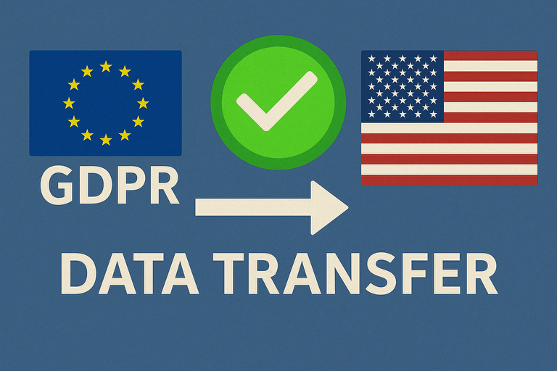
GREEN LIGHT: HAS THE CJEU REALLY SECURED GDPR DATA TRANSFERS TO THE U.S.?
Transatlantic data exchanges are projected to form the foundation of over $1 trillion in yearly trade and investment for multinational companies. Despite its lucrative potential, there has been a long-standing legal tennis match in relation to the legal basis of data transfers to the U.S. and the third set has been played. In this article we analyse the decision of the General Court in the Latombe v Commision case.
Smartlegal Schmidt&Partners reports from Hungary:

Practical Guide to Navigating the Licensing Process: Legal Requirements – Procedures for Operating a Business in Turkey
Starting a business in Turkey requires securing the appropriate licenses and permits based on the business’s legal structure, sector, and location. All businesses must fulfill general requirements such as trade registry, tax registration, and municipal workplace licensing. Sector-specific activities – like food, healthcare, tourism, construction, and Telecom – require additional approvals from relevant ministries. Businesses in Free Zones, OIZs, or Technoparks benefit from incentives but must comply with specialized regulations. Ongoing compliance, timely renewals, and accurate reporting are essential to avoid legal risks. Practical challenges such as bureaucratic delays, zoning restrictions, and legal updates make professional legal support crucial. Bıçak Law Firm provides comprehensive legal assistance at every stage of the licensing and compliance process, ensuring businesses operate lawfully and efficiently in Turkey.

COMPANY LAW UPDATE: FAST TRACK MERGER AMENDMENTS
The Ministry of Corporate Affairs (MCA), by notification G.S.R. 603(E) dated 4th September 2025, has introduced the Companies (Compromises, Arrangements and Amalgamations) Amendment Rules, 2025. These rules expand the ambit of fast-track mergers under Section 233 of the Companies Act, 2013. The reform is intended to ease restructuring, reduce dependence on the National Company Law Tribunal (NCLT), and shift simpler schemes to an administrative route through the Regional Director (RD).
For more details, please click here.

UNLAWFUL FLAT OCCUPIERS AND CROSS-BORDER LAWSUITS: WHAT THE CJEU SAYS?
Do the courts of the Member State where the unlawfully occupied housing is situated have exclusive jurisdiction over claims for compensation for the non-contractual use of a real property? Can such compensation be regarded as a matter relating to tort? Can an occupant residing in a different Member State than the other occupants be sued together with them as anchor defendants? To know the answers, read our article which analyses a fresh judgment of the CJEU.
Smartlegal Schmidt&Partners reports from Hungary:

THE EU DATA ACT WILL BE APPLICABLE WITHIN 30 DAYS – ARE YOU READY TO COMPLY?
The EU Data Act, adopted in 2023, will be enforceable from 12 September 2025, except for some parts that will come into force later in 2026. The Data Act is a cornerstone of the EU’s Strategy for Data, aimed at tackling down data monopolies and boosting Europe’s data economy, promoting sharing, innovation, and fair value distribution across stakeholders. In our article, we summarize the scope and key aspects of the legislation.
REGULATORY UPDATE: FOREIGN EXCHANGE MANAGEMENT (GUARANTEES) REGULATIONS, 2025
The Reserve Bank of India (“RBI”) has issued the draft Foreign Exchange Management (Guarantees) Regulations, 2025 (“Draft Regulations”) on 14 August 2025 for public feedback. Replacing the 2000 framework, the Draft Regulations shift from a transaction-specific approach to a principle-based regime, introducing mandatory reporting and extending compliance responsibilities for persons resident in India involved in cross-border guarantee arrangements. [Click here to view the draft issued by RBI.]

LITIGATION UPDATE: INDIVIDUALS LIABILITY IN CASE OF ONE PERSON COMPANY
On 3 July 2025, the High Court of Bombay passed an Order setting aside directions passed by Arbitral Tribunal imposing personal liability on sole shareholder of One Person Company (OPC).